SODTurnforAustralianWildlife
HutchiesbreaksgroundatthenewCurrumbinWildlifeInstitute
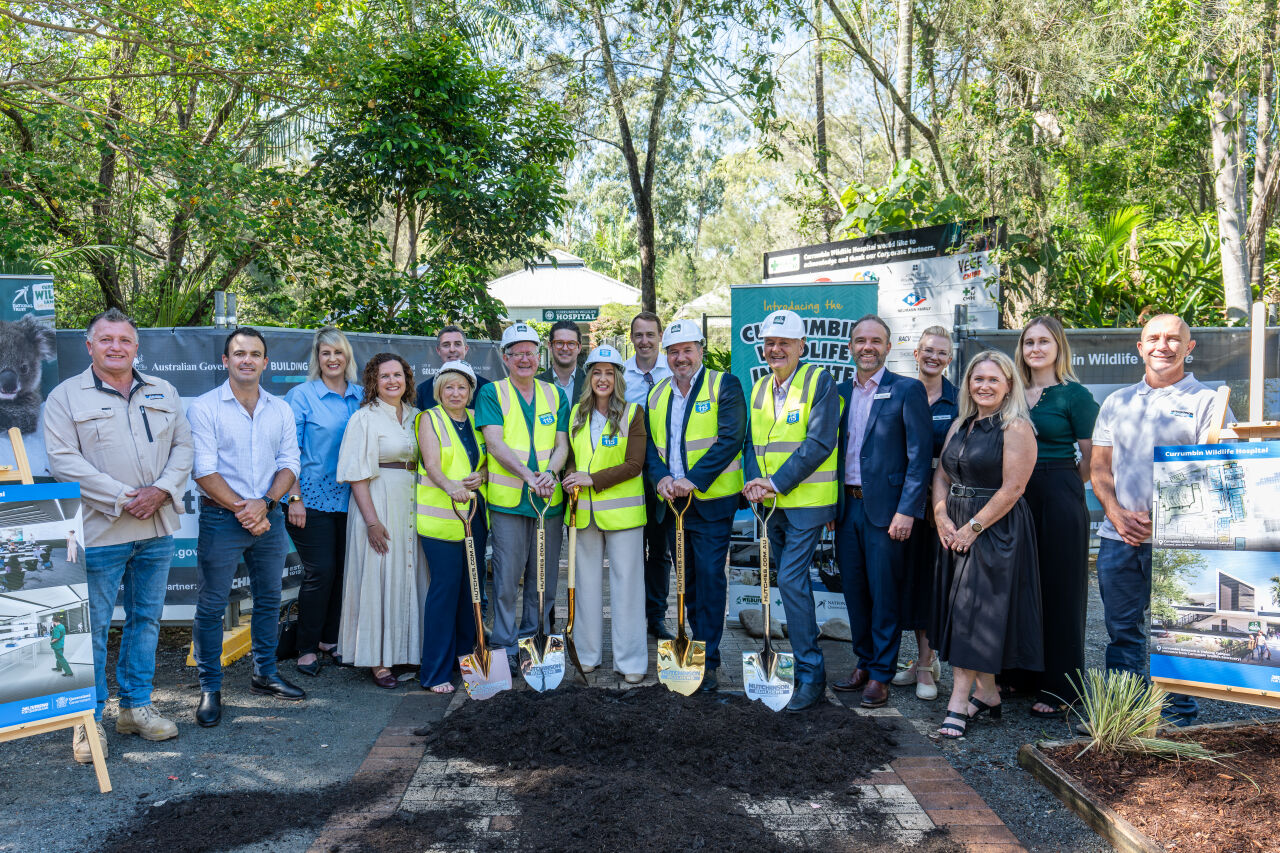
Construction is now underway on the Currumbin Wildlife Institute, a new research and education facility at Currumbin Wildlife Hospital.
The project marks an important step forward for wildlife care in Australia.
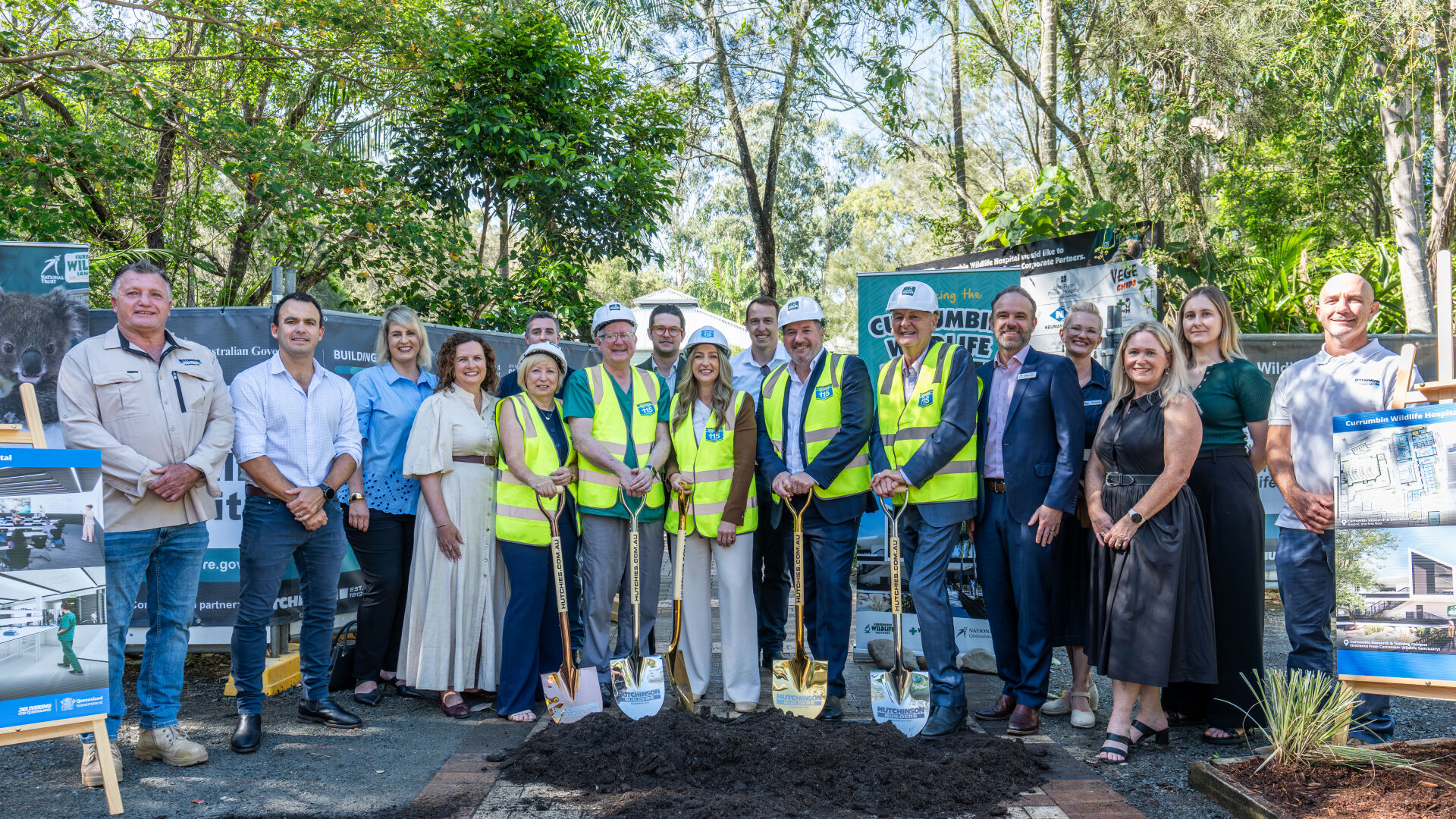
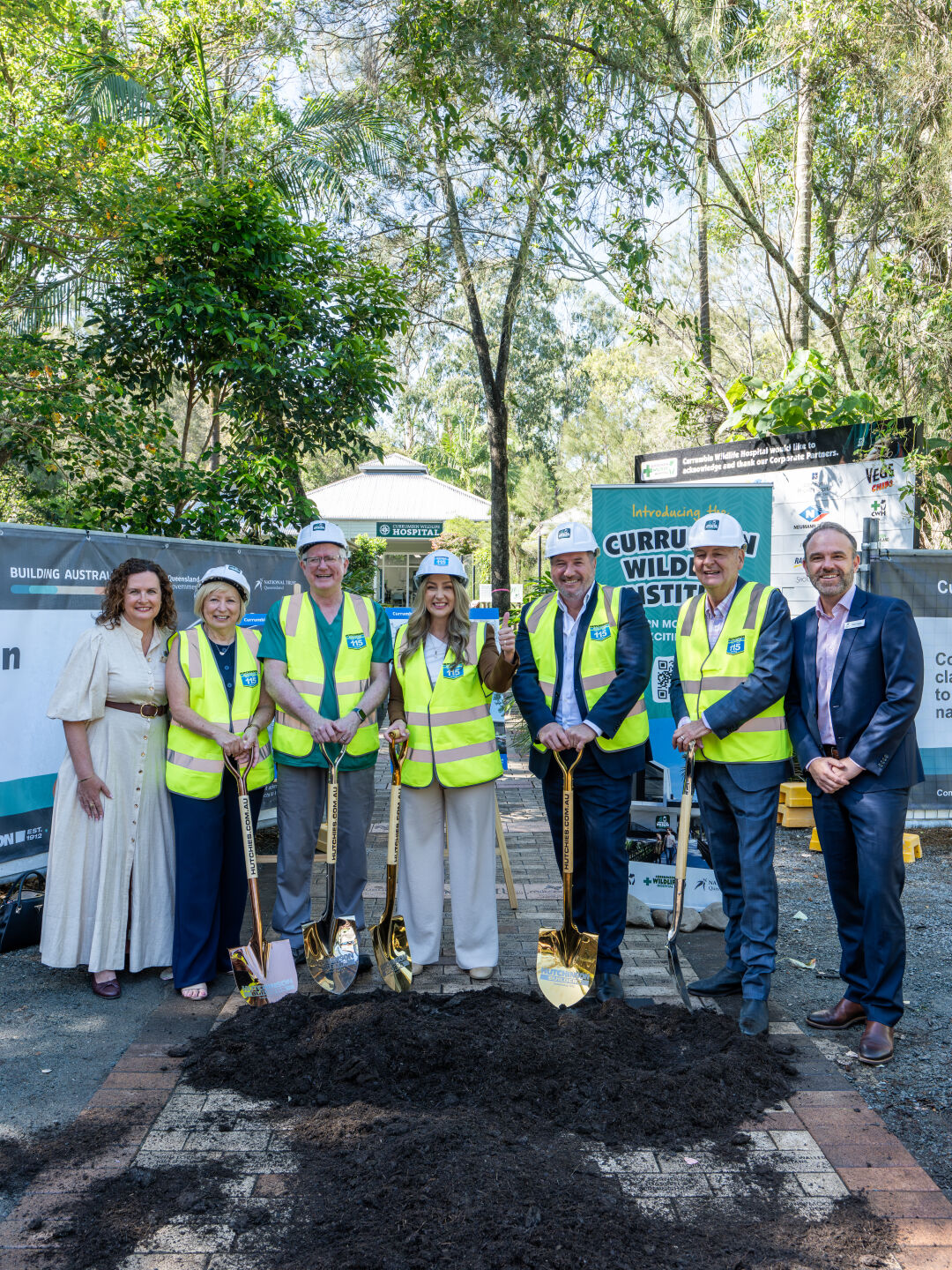
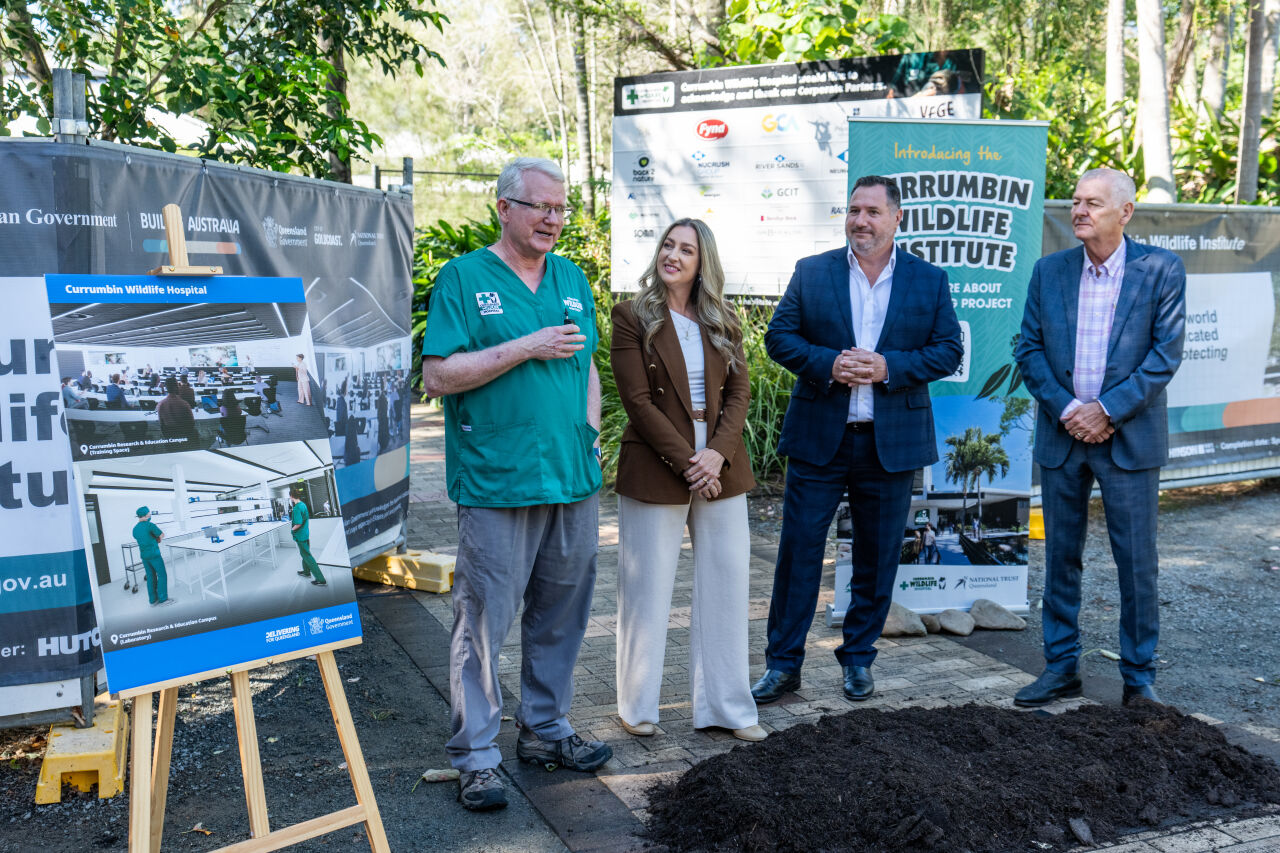
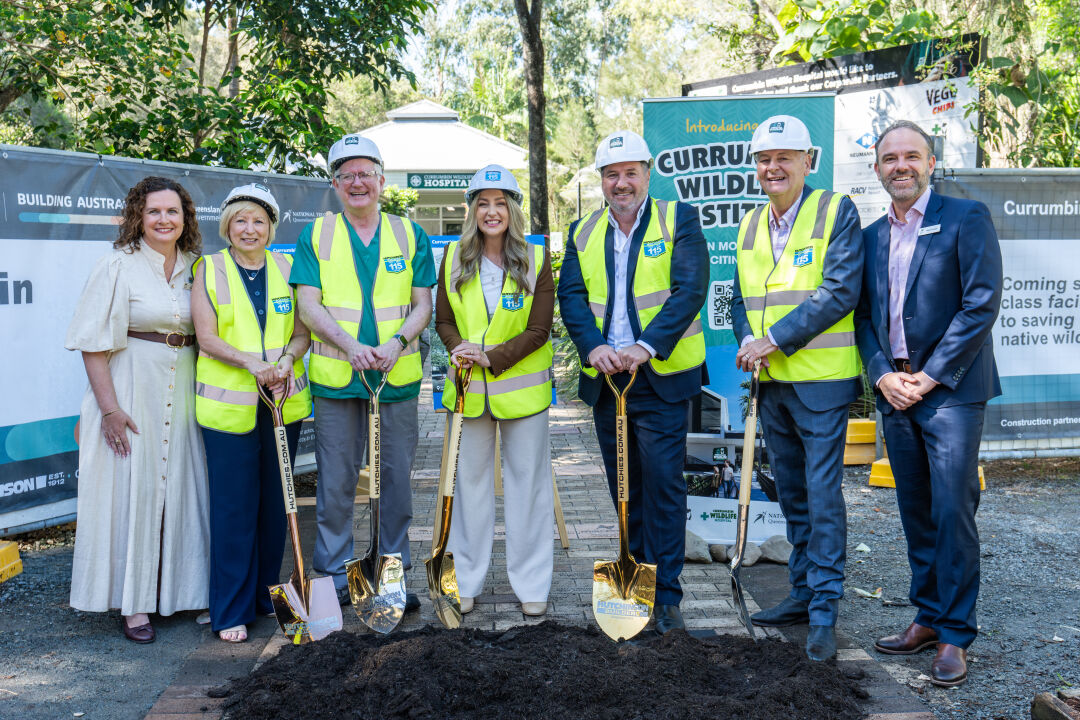
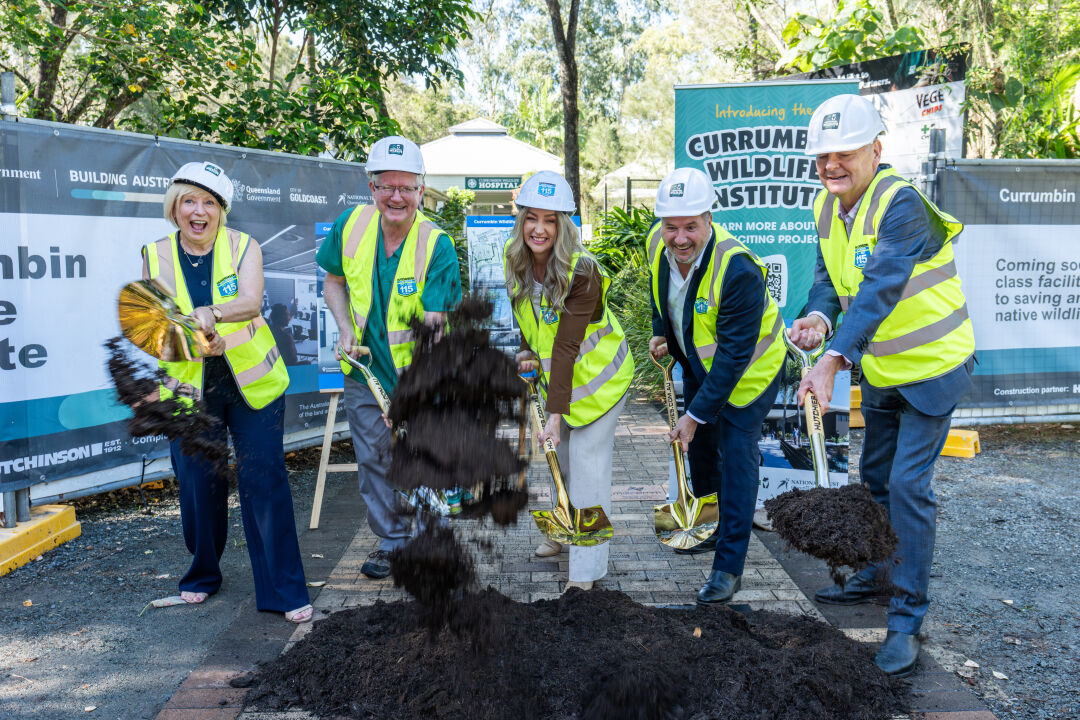
The milestone turning of the soil event was attended by the Queensland Minister for Environment and Tourism, Andrew Powell, alongside Hutchies’ Coolangatta Team Leader Murray Emmerson, project partners, supporters and the Currumbin Wildlife Hospital community.
Hutchies is proud to be building the new Institute, which will support one of the busiest wildlife hospitals in the world. The facility will strengthen the hospital’s ability to treat sick and injured native animals, while expanding vital research into wildlife disease.
Currumbin Wildlife Hospital admits around 15,000 wildlife patients each year. Many arrive with complex injuries or illnesses that require specialised care, long recovery periods and detailed investigation.
The new facility will give veterinary scientists, carers and volunteers the space and infrastructure they need to respond to this growing demand.
Caring for wildlife of every size
Animals treated at Currumbin Wildlife Hospital range from some of Australia’s smallest species to its most powerful birds of prey.
Micro bats arrive so small that veterinary teams strap them to paddle pop sticks to keep them still during X-rays. At the other end of the scale are majestic wedge-tailed eagles, often brought in from the Beaudesert plains with serious injuries that require advanced treatment and rehabilitation.
Koalas are an almost constant presence at the hospital. Dedicated koala rehabilitation facilities support animals recovering from injury, illness and disease. This includes long-term care for koalas affected by conditions that threaten populations across Queensland.
The hospital also cares for possums, gliders, reptiles, seabirds and countless native bird species. Every case brings its own challenges and requires specialist knowledge.
One of the Hospital’s most remarkable resources is its feather library. When a bird does not survive, its flight feathers are carefully preserved. These feathers are later implanted into injured birds that cannot fly, allowing them to regain function and return to the wild.
This level of care reflects both the skill of the teams involved and the deep respect for every animal that passes through the hospital’s doors.
Supporting wildlife through science
At the centre of the new Institute is research.
Purpose-built laboratories and teaching spaces will allow scientists to study disease, improve treatment methods and advance vaccine development. This work plays a critical role in protecting Australia’s native species.
Research undertaken at Currumbin Wildlife Hospital has already contributed to better outcomes for wildlife, including work focused on diseases that threaten entire populations. The new facility will allow that work to continue at a larger scale and with greater reach.
Findings from the Hospital support wildlife care across Queensland and contribute to broader national and international research efforts.
By bringing treatment, research and education together in one place, the facility will help shorten the gap between discovery and care.
The new campus will also support education.
Students, researchers and future veterinarians will have access to purpose-designed learning spaces. These environments will help build skills, share knowledge and inspire the next generation of wildlife carers. The Hospital’s research team is working on vaccines for chlamydia in koalas, a disease that can devastate populations if left untreated.
Visitors will gain a deeper understanding of the work that happens behind the scenes at the Hospital. Seeing care in action helps build awareness of the challenges facing native wildlife and the effort required to protect them.
Education plays a key role in prevention. Understanding disease, habitat pressures and human impact helps reduce future harm to animals.
Recognising the people behind the care
While buildings and equipment matter, the heart of Currumbin Wildlife Hospital is its people.
Veterinary scientists, nurses, carers and volunteers work every day to treat injured and sick animals. Their work is demanding, precise and often urgent.
Many cases involve long hours, specialised treatment and close monitoring. Recovery can take weeks or months. Every animal requires patience and care.
The new facility will provide safer, more efficient workspaces and better support for teams delivering this care. It also creates room for collaboration between clinicians and researchers, helping ideas move quickly from research to practice.
Building with purpose
For Hutchies, this project is about more than construction.
The team understands the responsibility that comes with building a place dedicated to healing and research to support the array of native wildlife that pass through the hospital. Construction has been planned to make minimal impact to ongoing hospital operations, ensuring animals continue to receive care throughout the build.
Projects like this reflect Hutchies’ long-standing experience delivering complex facilities where precision, safety and continuity matter.
The new facility is expected to open in 2027. Once complete, it will support improved outcomes for wildlife, stronger research capability and better education opportunities.
Hutchies is proud to play a role in building a place where animals heal, knowledge grows and the people who care for wildlife can continue their important work.
Caring beyond construction
While construction on the new Institute is underway, Currumbin Wildlife Hospital continues to build momentum in raising the final funds required to complete construction, fit-out and essential medical equipment.
The Hospital is currently working towards a final $3 million goal to bring the Currumbin Wildlife Institute fully to life.
Following the success of the Turning of the Soil event, community support has already made a meaningful impact, including donations of critical equipment that will directly support research and treatment for native wildlife.
As a key project partner, Hutchies is proud to support the Currumbin Wildlife Hospital’s broader mission and encourages everyone to get involved where they can. Whether through donations or other forms of support, every contribution helps equip veterinary teams with the tools they need to save animals and advance vital research.
Help support the institute's fundraising efforts to complete the Currumbin Wildlife Institute, including essential medical equipment.
You can also find out other ways to get involved on the Wildlife Hospital’s website.